
The Stack Effect in Action
Due to the phenomenon known as the “Stack Effect”, as much as 50% of the air you breathe inside your home can come directly from the crawl space.
As hot air rises and escapes through the upper levels of your home, it is replaced by unpleasant crawl space air, creating a pulling effect that exposes you and your family to poor air quality in the living areas of your home.
The Stack Effect: How Crawl Space Air Ends Up in Your Home
See how warm air leaving the top of your house pulls damp crawl space air up through the floors, and what Olshan does to help stop it at the source.

What Happens in Your Crawl Space Affects the Air Quality Inside Your Home
Do you or your house guests notice strange, musty smells in your home? Chances are it’s coming from your crawl space.
But that’s just how older crawl space homes are supposed to smell, right? Well… not exactly.
Strange odors emanating from the crawl space aren’t just unpleasant and potentially embarrassing when you have guests over. They are often an indicator of excess moisture underneath the foundation resulting in poor air quality inside your home.
Damp, humid crawl spaces provide ideal living conditions for mold growth, allergens and dust mites to thrive.
Poor Indoor Air Quality Should not be Ignored
Due to the stack effect, even homes without visible crawl space moisture problems can experience high levels of humidity inside the home. This is usually caused by water vapor passing through the crawl space and floors. Mold and condensation are two major problem points.
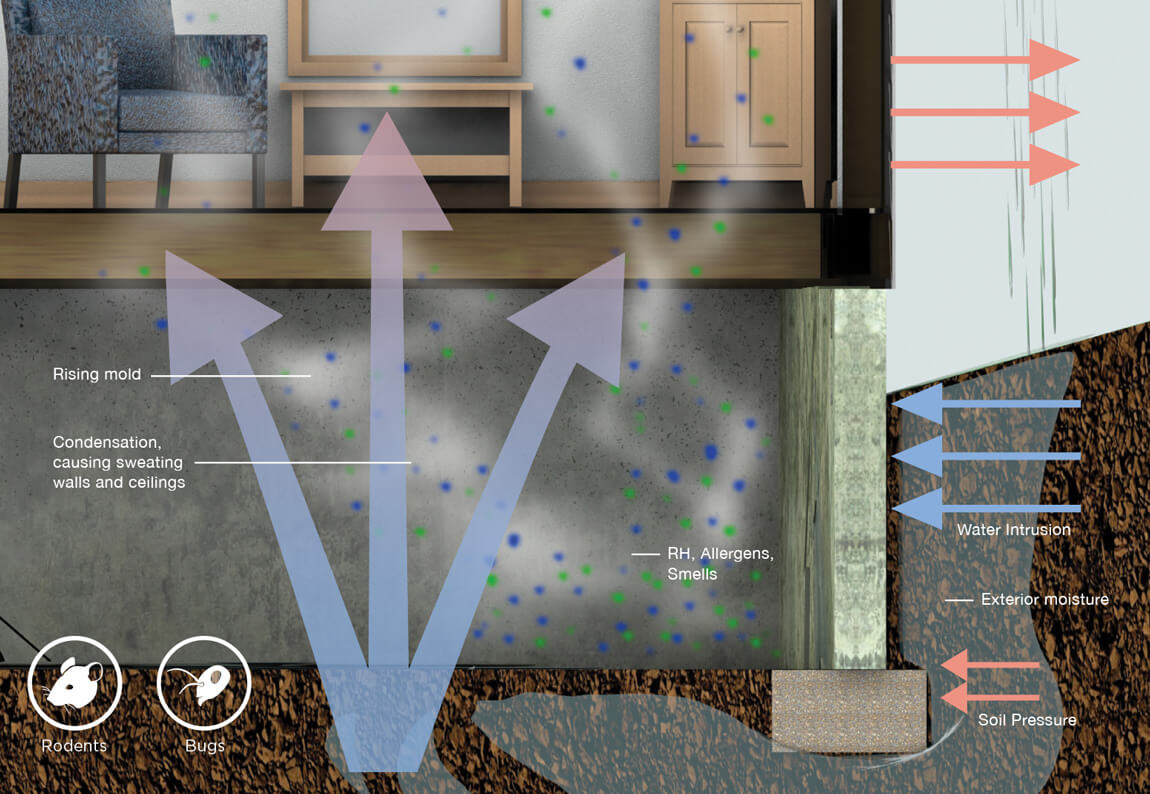
High Levels of Humidity Inside the Home
Relative Humidity (RH) is the amount of water in the air relative to the maximum amount of water the air can hold at a given temperature. The higher the RH, the higher the moisture content in the air.
Problems associated with high RH include:
Sharing Your Home with Unwanted Guests?
Poor indoor air quality caused by high indoor RH levels can lead to a host of problems that impact your home and the people living in it. Dust mites and insects thrive in areas with high RH levels, like crawl spaces. Dust mites are the leading cause of indoor asthma attacks according to the EPA.
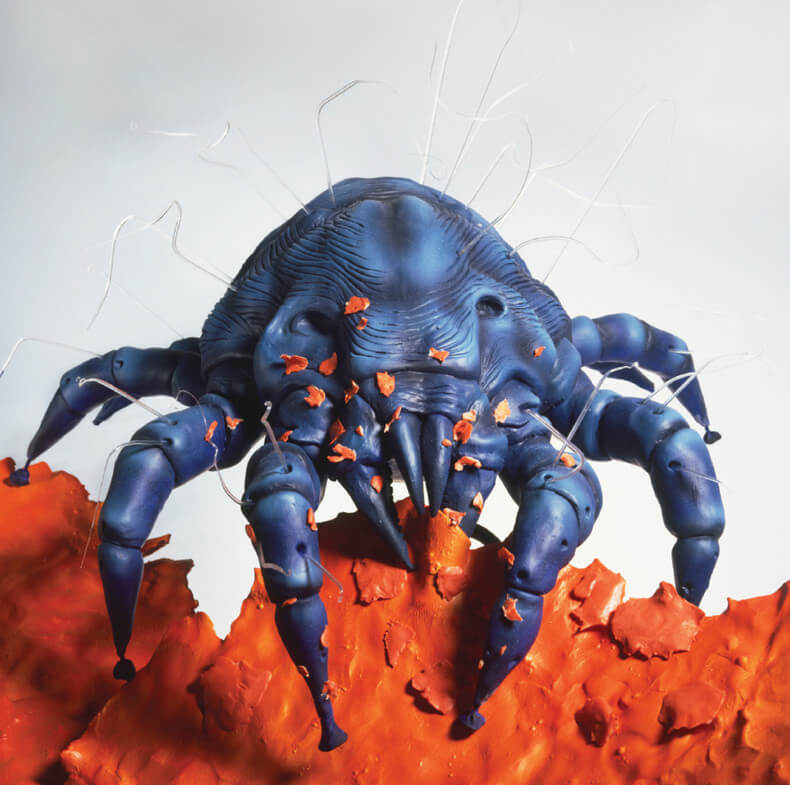
What’s in the Air Matters

Moisture causes mold. Mold in any area of a home poses potential air quality problems, such as allergy-like symptoms, unexplained headaches or other health issues.
According to the Environmental Protection Agency (EPA), allergic reactions can include but are not limited to sneezing, runny nose, red eyes and skin rashes.
A wet crawl space often causes musty smells and makes the home feel overly humid and uncomfortable. Crawl space humidity always migrates upwards towards the drier air in the living areas of the home. The elevated humidity can contribute to higher heating and cooling costs and negatively affect the value of your home.
Breathe Easy. Call  Olshan
 Olshan
The good news is that indoor air quality can be improved. By incorporating an effective air quality strategy in conjunction with water management, Olshan can help eliminate the unfavorable conditions that exist inside your crawl space. Olshan offers industry-leading air exchange technologies and crawl space encapsulation to help correct poor crawl space air.
This allows you and your family to enjoy healthy, fresh air while transforming a damp, uncomfortable crawl space into a useful extension of your home.
Smell it upstairs? It started in the crawl space.
Schedule a free crawl space inspection with Olshan. We’ll find the moisture source and show you how encapsulation and air exchange can help you breathe easier.
