
Award Winning Foundation Repair in Kilgore, TX
Kilgore has one of the most dramatic origin stories of any city in Texas. In 1930, it was a struggling farm community of fewer than 500 people facing economic collapse alongside the rest of the country. Then Dad Joiner’s Daisy Bradford No. 3 came in, and within months Kilgore was the epicenter of the largest oil field discovery in American history. The population swelled from 500 to more than 12,000 in a matter of years. More than a thousand oil derricks stood within city limits at the height of the boom – including the famous World’s Richest Acre downtown, where 44 producing wells occupied a single city block. Buildings were demolished to make room for drilling rigs. Wells went in next to homes, inside bank lobbies, through church floors.
The oil boom built Kilgore fast and built it with urgency. Kilgore College, the downtown infrastructure, the residential neighborhoods that spread out from the boom’s center – all of it went up quickly, on ground that had been disrupted by the most intensive drilling operation in the history of the petroleum industry. Nearly a century later, the legacy of that rapid construction on disturbed ground – combined with Gregg County’s expansive clay soil and East Texas’s demanding climate – is felt in foundations throughout the city.
Olshan has been repairing foundations across East Texas since 1933 – which means we were working in this region while the boom was still in full force and the concrete was still curing on Kilgore’s first permanent structures. We know this soil, this climate, and this city’s unique construction history. If your foundation is showing signs of movement, we’d like to help.
What the Ground Beneath Kilgore Is Doing to Foundations
Kilgore sits in Gregg County, squarely within the East Texas Piney Woods, where the soils are a clay-heavy mix that behaves predictably – and problematically – in the region’s wet-dry climate cycle. The clay expands when saturated during spring rainfall events and contracts during the long, hot East Texas summers when moisture evaporates from the ground faster than it can be replenished. That shrink-swell cycle is the fundamental driver of foundation movement throughout this region, and it operates year-round because East Texas’s mild winters provide no dormancy period for soil activity.
Kilgore has a specific layer to this story that most East Texas cities don’t share: the legacy of the oil boom’s ground disturbance. When more than 1,000 wells were drilled within city limits in the 1930s – on residential lots, in downtown blocks, through the floors of occupied buildings – the soil throughout large portions of the city was disturbed in ways that altered its natural compaction, drainage characteristics, and structural behavior. Fill soil placed during rapid boomtown construction doesn’t behave the same way undisturbed native clay does. It settles unevenly, compresses under load over time, and responds to moisture cycling in ways that can produce foundation movement even in homes built decades after the wells were capped and the derricks came down.
The Piney Woods forest canopy that surrounds and runs through Kilgore adds the same variable it creates throughout East Texas – mature pine, oak, and sweet gum root systems that extract moisture from the soil around foundations during dry periods, creating localized contraction directly where structural support is most critical.
Kilgore’s Housing Stock – Built in Haste, Aged by a Century of East Texas Soil
The homes of Kilgore tell the story of a city that went from farmland to boomtown to established community across multiple distinct eras, each with its own construction characteristics and foundation vulnerabilities.
The earliest permanent residential structures – built in the frantic years of the early 1930s when workers, speculators, and their families were flooding in faster than the city could accommodate them – were often modest, quickly constructed, and placed on ground that had been recently disturbed by drilling activity. Many of these homes were pier and beam construction, appropriate for an era when concrete slabs weren’t yet standard, and their crawl spaces have now been exposed to Gregg County’s humidity and clay soil conditions for more than 80 years.
The post-boom stabilization period of the 1940s through 1960s produced the largest share of Kilgore’s housing inventory – mid-century homes on concrete slab foundations that are now 60 to 80 years old. These structures have been through as many as seven or eight decades of East Texas wet-dry cycles. For those built on oil boom-era disturbed fill, the cumulative soil consolidation beneath them over that period can be significant. For those on undisturbed native clay, the decades of shrink-swell cycling have accumulated in ways that become visible as differential movement – one section of a slab settling faster or deeper than adjacent sections.
Newer residential development along the Highway 259 corridor and on the eastern and southern edges of Kilgore puts more recent construction into the mix, but the soil here doesn’t grant exemptions based on construction date. Gregg County clay affects new foundations on a timeline measured in years.
Foundation Repair
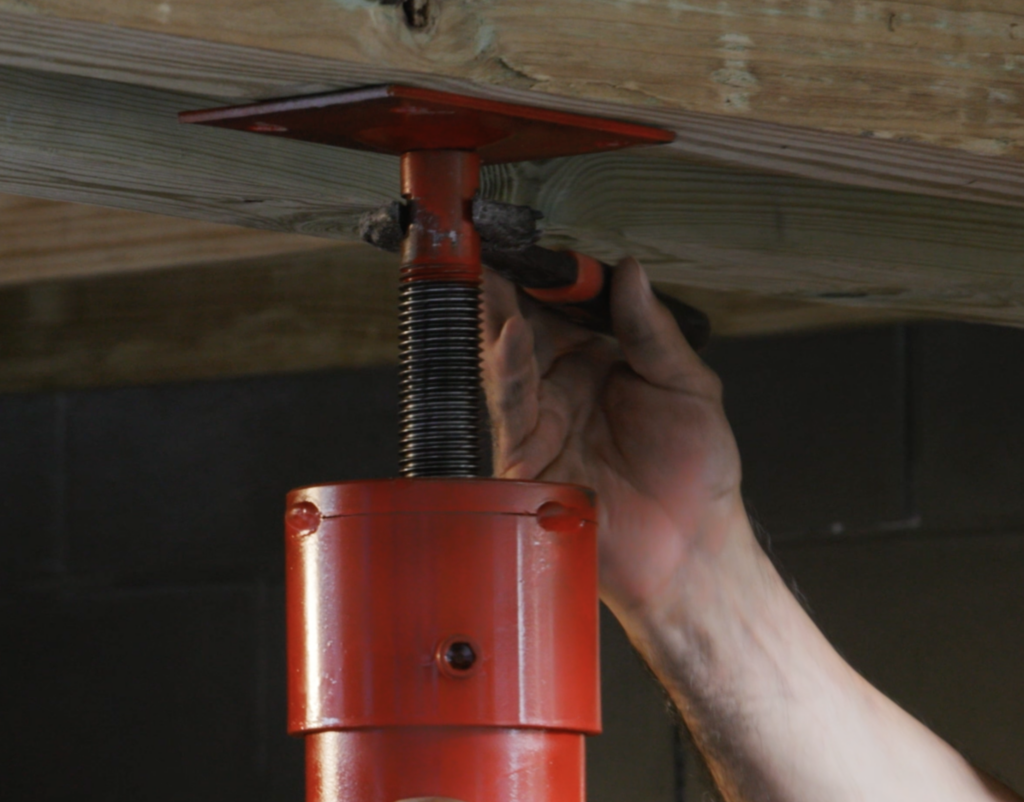
Olshan’s Cable Lock ST Plus system is our core solution for Kilgore and Gregg County, and it addresses the specific mechanisms that drive foundation failure here: clay soil movement in the active zone near the surface, compounded in many Kilgore locations by the subsurface disturbance legacy of the oil boom’s ground-level activity. Our patented hybrid piers combine steel cable reinforcement with concrete, driven below the depth where seasonal moisture variation and residual fill soil consolidation cause movement. The result is stable, permanent anchorage in bearing soil that doesn’t respond to what happens above it.
Kilgore’s construction history means that what’s beneath a particular home’s foundation often bears no resemblance to what’s beneath its neighbor’s. A lot that sat in the path of intensive drilling activity in the 1930s has a fundamentally different subsurface profile than a lot that was undisturbed farmland. Our Certified Structural Technicians don’t assume – they evaluate each home’s specific conditions before recommending a solution. We also offer helical piers where soil conditions warrant, and pressed concrete pilings for situations where cost and access make them the right choice.
What active foundation movement looks like in Kilgore homes:
- Diagonal cracks through drywall or plaster that have been growing slowly for several years in mid-century Kilgore homes
- Doors in boom-era neighborhoods that bind or drag differently depending on the season – worse in dry summers, looser after spring rains
- Uneven floors in older pier and beam homes where cumulative soil movement has tilted the beam system over decades
- Slab differential movement producing a visible slope in floors of post-WWII Kilgore homes built on consolidated fill soil
- Exterior brick separation that has accelerated in recent years as seasonal moisture extremes have intensified
Crawl Space Recovery
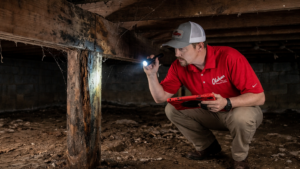
Kilgore’s older pier and beam homes sit on crawl spaces that are, in many cases, completely unprotected from the East Texas moisture environment. Gregg County’s humidity is relentless, ground moisture under unencapsulated crawl spaces stays elevated year-round, and the pine and hardwood forest environment that surrounds the city means that organic debris accumulates under these homes in ways that accelerate the fungal and pest activity that breaks down structural wood.
The specific concern in Kilgore that goes beyond general East Texas pier and beam deterioration is the potential for subsurface moisture channeling beneath older homes in areas where historical drilling activity altered the natural soil drainage patterns. Wells drilled through residential lots in the 1930s were plugged and capped, but the soil disturbance around those sites can create moisture migration pathways that concentrate ground moisture beneath crawl spaces in ways that weren’t part of the original site’s hydrology. What presents as a standard crawl space moisture problem may have a more complex underlying cause in this city.
Olshan’s crawl space recovery services address what we find, regardless of its origin: structural post repair or replacement, Lumberkote wood preservation treatment applied to existing timber, complete vapor barrier encapsulation of the crawl space floor and perimeter, and air quality remediation for homes where crawl space conditions have been affecting the living environment above. A properly treated and sealed crawl space stops producing the moisture cycle that deteriorates structural wood and stops sending that contaminated air upward into the home.
What we address:
- Wood pier deterioration in Kilgore’s older homes accelerated by Gregg County’s persistent ground-level humidity
- Subfloor decay in boom-era pier and beam structures that have had unmanaged crawl spaces for 80-plus years
- Moisture channeling beneath crawl spaces in neighborhoods where historical oil field ground disturbance altered subsurface drainage
- Active mold and fungal growth on structural wood encouraged by uncontrolled East Texas crawl space conditions
- Compromised indoor air quality from contaminated crawl space air migrating into living areas through floor gaps and HVAC systems
Exterior Water Management
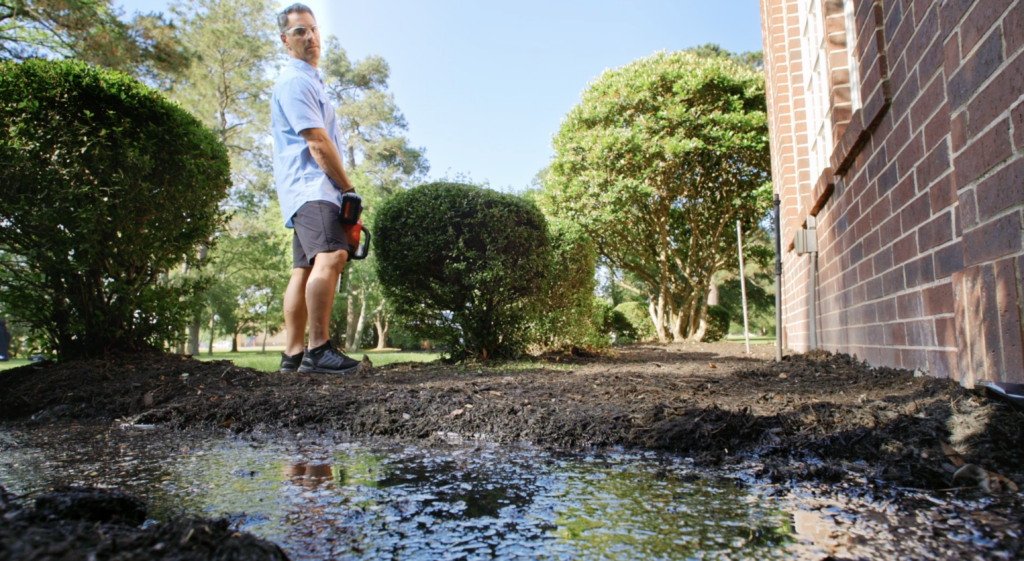
Kilgore receives roughly 46 inches of rain annually – distributed unevenly, with wet springs and dry summers that mirror the same moisture cycling pattern that drives clay soil movement. The city’s terrain is relatively flat in most residential areas, which means water doesn’t move away from foundations naturally without intentional drainage design. In the older neighborhoods near downtown where the oil boom housing was concentrated, drainage infrastructure was built to the standards of the 1930s and 40s – standards that predated modern understanding of how sustained moisture against foundation perimeters accelerates soil expansion and the structural consequences that follow.
In many Kilgore neighborhoods, the drainage picture has gotten more complicated over time, not less. Mature trees have redirected surface and subsurface water flow. Decades of landscaping changes have altered how water moves across individual lots. Original site grading has shifted as soil has settled unevenly. The result in a substantial number of Kilgore properties is that water from rain events is traveling toward foundations rather than away from them – and in Gregg County’s clay soil, water that accumulates against a foundation perimeter stays in contact with the soil for days after the rain has stopped.
Olshan evaluates the specific drainage behavior of each property and installs solutions that fix the problem at its source. French drains that intercept and route water before it reaches the foundation. Surface channel systems that manage roof runoff more effectively than existing downspouts. Lot regrading that reestablishes positive drainage slope away from the structure. The goal isn’t complicated: get water moving away from the foundation perimeter and keep it moving.
Drainage problems we regularly address in Kilgore:
- Flat residential lots in older Kilgore neighborhoods with insufficient natural drainage gradient away from structures
- Drainage patterns in boom-era neighborhoods disrupted by decades of subsurface soil consolidation and landscaping change
- Water pooling adjacent to foundations in Gregg County clay that holds moisture for extended periods after rainfall
- Downspout discharge concentrating significant roof runoff volume directly against foundation perimeters
- Surface drainage blocked or redirected by mature tree root systems that have grown into and under drainage paths over decades
Concrete Leveling – PolyLift
The same soil conditions that move foundations in Kilgore move the concrete flatwork around them – and in a city where a substantial share of driveways, sidewalks, and patio slabs were poured in the 1940s, 50s, and 60s, the accumulated effect of decades of Gregg County clay cycling is visible throughout established residential areas. Driveways that slope toward garages instead of away from them. Entry walks that have dropped at the seam closest to the house. Patio slabs that tilt slightly inward and direct rainwater at the back foundation of the home every time it rains.
In a city with Kilgore’s history, full concrete replacement is rarely the answer. The ground conditions that caused the settlement haven’t changed, and a new slab will begin responding to them on day one. PolyLift addresses the mechanism of failure: high-density polyurethane foam injected beneath settled slabs fills the voids that clay contraction and soil consolidation have created, lifts the surface back toward original grade, and cures immediately without the disruption of heavy equipment or excavation. Jobs are typically complete in hours, with no extended cure time and no damage to surrounding landscaping.
Concrete problems PolyLift addresses in Kilgore:
- Driveways in mid-century Kilgore neighborhoods that have settled unevenly over decades of Gregg County clay movement
- Entry walks and approach slabs tilting toward structures and directing roof runoff at foundation perimeters
- Patio and backyard concrete that has dropped away from the home’s rear foundation creating a drainage problem
- Garage floor slabs settled and separated from the threshold in older Kilgore slab homes
- Sidewalk sections displaced by a combination of clay cycling and mature tree root activity beneath the slab
Warning Signs in Kilgore Homes
Foundation movement in Kilgore’s clay soil develops gradually – which means there’s usually a window between when warning signs first appear and when structural damage becomes serious. Don’t ignore these signals:
- Wall cracks that appear or widen after dry summer periods and partially close during wet springs – this seasonal pattern is a clear indicator of active clay movement beneath the foundation
- Doors and windows that have gradually become harder to operate, particularly in rooms on the perimeter of the home closest to large trees
- Floors with a detectable slope that has been developing slowly over years rather than appearing suddenly
- Gaps forming at baseboards or crown molding that weren’t visible when the home was purchased
- Stair-step cracking through exterior brick mortar joints, particularly on elevations that receive less direct drainage away from the home
- A crawl space with visible moisture, wood discoloration, or a musty odor reaching the first floor
Serving Kilgore and Gregg County
Olshan serves Kilgore and the surrounding communities of Gregg County and the broader East Texas oil country – including Longview, Gladewater, White Oak, Henderson, Carthage, and the communities throughout the East Texas field area. We’ve been working in this region since 1933, which means our history in Kilgore runs parallel to the city’s own – we were repairing foundations here when the boom was still recent memory and the city was still finding its footing after the most intense period of ground disturbance in its history.
Every evaluation starts with a free, no-obligation inspection. Our Certified Structural Technicians will assess your home, walk your property, and give you a straight answer about what they find. About 20% of the homes we inspect don’t require any repair at all, and we’ll tell you that when it’s the case. Contact Olshan today to schedule your free foundation inspection in Kilgore, TX.