Basement Waterproofing for Hendersonville, TN Homes
We provide basement waterproofing for Hendersonville homeowners who want to help manage leaks, support structural integrity, and reclaim valuable below-grade space as part of broader home improvement goals. By combining interior and exterior approaches, water intrusion solutions, and guidance from a Certified Structural Technician, we focus on how water moves around the foundation so moisture has controlled paths to follow instead of spreading across floors and walls. Our goal is to help support long-term structural integrity, improve basement air quality, and coordinate with related foundation repair and home improvement plans.
In this updated guide, we explain how water enters a basement, compare interior and exterior waterproofing, outline how our Water Lock™ Plus system works, and describe how air quality and structural considerations connect. We also highlight complementary water management systems, ongoing maintenance needs, and how a free evaluation can help determine which combination of basement waterproofing and foundation repair solutions may fit each Hendersonville home.
What Basement Waterproofing Means for Your Home
Basement waterproofing focuses on how water interacts with the structure so moisture does not turn that level into unusable space or contribute to structural problems. Water commonly enters through floor cracks, wall cracks, joints, and window areas when excess soil moisture and hydrostatic pressure push water toward the basement. Our role is to provide water intrusion solutions that help reduce this pressure, direct water into controlled drainage paths, and move it away from the foundation to support structural integrity.
We rely on interior and exterior approaches that can work alone or in combination, depending on where seepage appears and how the basement is used. Interior basement waterproofing allows water to enter controlled channels, then moves it away using interior drainage components and, when appropriate, sump pumps or gravity drains. Exterior waterproofing works from outside the walls to help stop water before it gets in by using moisture membranes, dimple board, and footer drains in washed gravel. By addressing these pathways, homeowners can help reclaim basement square footage, reduce conditions that support mold, and support structural integrity while considering options that include warranty coverage backed by our basement waterproofing programs.
Common Signs and Risks of Water Intrusion
Water often enters a basement along a handful of predictable paths, and recognizing these early can help protect usable space and structural stability. When water pushes up through floor cracks, pressure from saturated soil exploits even hairline openings, leading to standing water, damaged finishes, and potential settlement concerns that may call for cracked walls repair and related water intrusion solutions. Seepage from under the footer follows gaps between the footer and slab, gradually turning storage areas into damp zones if conditions remain unmanaged and allowing musty odors to develop.
Persistent moisture from bleeding and sweating walls or around window sills can degrade basement air quality, encourage mold growth, and introduce electrical concerns near outlets and equipment. Intrusion through cracks in walls and mortar joints, or over the top of the footer, increases hydrostatic pressure and may contribute to bowing, new cracking, or foundation movement that may need foundation repair in addition to drainage work. Our technicians can evaluate how these patterns affect each Hendersonville home, recommend targeted water management systems, and help prioritize which areas to address first as part of an overall basement waterproofing and foundation repair strategy.
Comparing Interior and Exterior Waterproofing Approaches
Interior waterproofing and exterior waterproofing share the same objective—managing intrusive water around basement walls and the footer—but approach the challenge from different sides of the structure. Interior solutions intentionally allow seepage from floor cracks, joints, or sweating walls to enter controlled channels, then move it into water management systems such as Water Lock™ Plus drains, under-floor or baseboard drainage, and sump pumps or gravity outlets. This work typically requires concrete breakout along the interior perimeter and often can be completed within a shorter installation window while remaining accessible for service or expansion.
Exterior waterproofing is designed to help stop water before it enters the basement by excavating along the wall, installing an exterior moisture barrier with dimple board, and placing a footer drain in washed gravel to transport water away from the structure. Because the work occurs outdoors, it may be well suited for finished basements that homeowners want to keep undisturbed. Soil conditions, slab type, how the basement is used, and the locations where seepage appears all influence which method, or combination of methods, our technician recommends.
Introducing the Water Lock™ Plus Interior System
Our Water Lock™ Plus system relies on interior water management systems purpose-built to help manage water that enters along the wall-floor joint and beneath the slab. The dual-channel configuration combines a geo tech fabric filter channel with an open high-flow channel so intrusive water is captured through multiple entry points and directed toward a discharge path as part of comprehensive basement waterproofing. The geo composite fabric is designed to help the system remain clog-resistant while the sturdy pipe resists crushing.
Because Water Lock™ Plus sits on top of the footer, away from dirt and gravel, it tends to stay cleaner than traditional pipe-and-rock drains or segmented pipe options that sit beside the footer. Only a relatively narrow 6″–8″ concrete breakout is typically required, preserving the structural footer while allowing the system to be custom fit along continuous walls. Many Water Lock™ Plus solutions are supported by warranty coverage tailored to this system.
Step-By-Step Installation and What to Expect
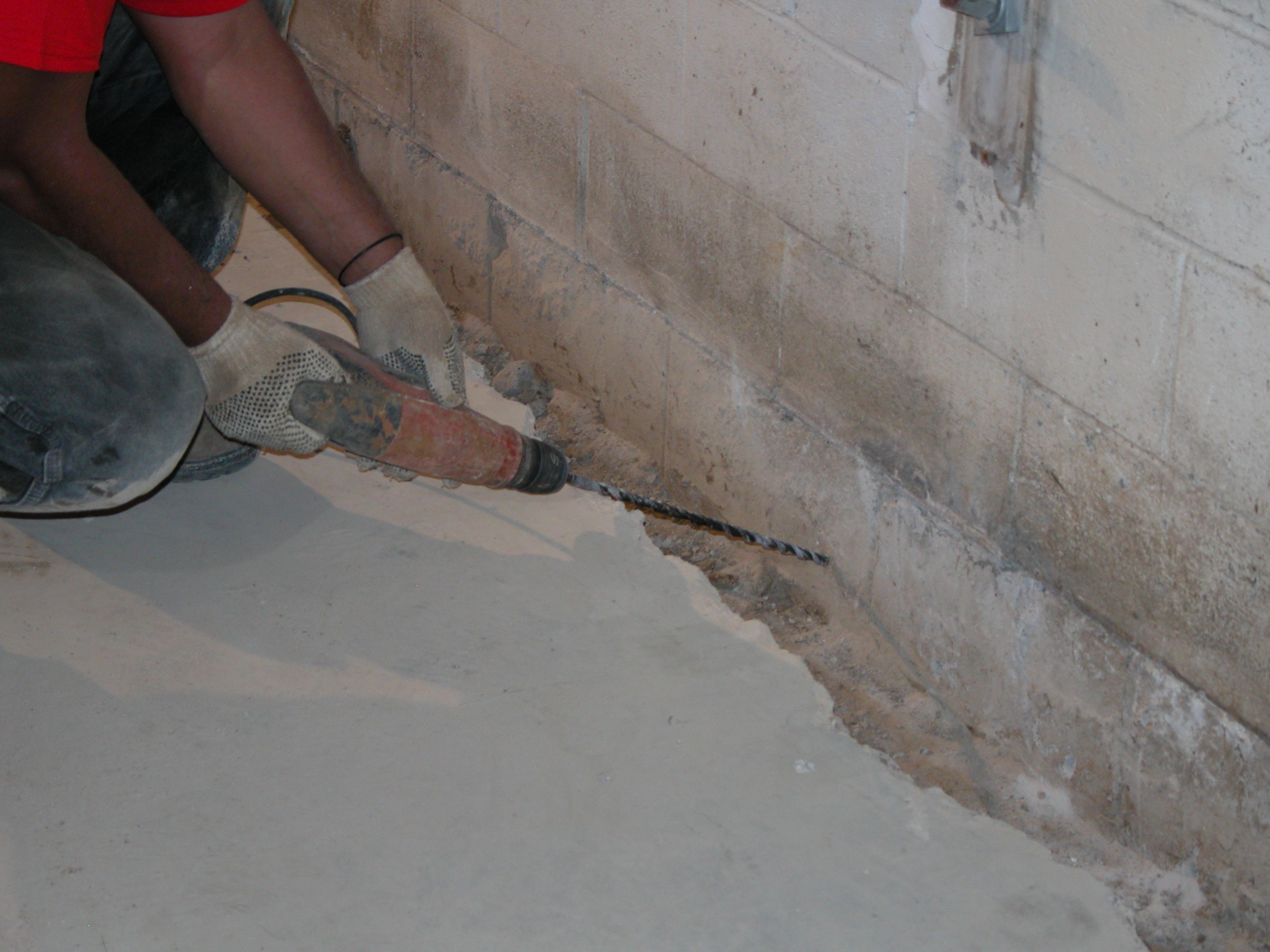
Once a Certified Structural Technician recommends the Water Lock™ Plus system during a free evaluation, our team prepares the work area and marks the interior perimeter. We carefully break out a narrow band of slab to expose the footer while keeping structural elements intact, then drill weep holes in block walls as needed so water trapped inside the blocks can drain into the new system instead of onto the basement floor. Where appropriate, we install optional Wall Shield panels that help direct moisture into the drain and provide a cleanable surface while also contributing to improved basement air quality.
Next, we place the dual-chamber Water Lock™ Plus pipe on top of the footer so it stays out of dirt and is designed to resist clogging, then connect the system to either a sump pump basin or a gravity drain depending on site conditions. After all components are installed and tested, we replace the concrete flush with the existing slab and clean the workspace so the basement is ready for use again. The evolution of Water Lock Plus explains how this approach grew from experience with earlier interior drains to enhance serviceability and long-term performance and support structural integrity.
Complementary Water Management Systems and Options
To tailor basement waterproofing to the way water enters a specific home, our Certified Structural Technician may recommend additional water management systems that complement Water Lock™ Plus. Pipe-and-rock alternatives, segmented pipe channels, surface glue-down drains, and the dual-channel Water Lock™ Plus pipe all move water toward a discharge point but differ in clog resistance, concrete breakout needs, and capacity. We apply each system where its strengths align with the home’s slab type, seepage patterns, and hydrostatic pressure so the overall water intrusion solutions plan remains balanced and coordinated with foundation repair when needed.
For monolithic slabs, where the slab and footing are poured as one structural unit, breaking the floor can disrupt load paths, so we often use a baseboard water channel option that avoids cutting through the slab. This approach, uses a low-profile channel bonded along the wall line and grooved into the floor surface to help move water toward a sump pump or gravity discharge while respecting structural considerations and supporting long-term home improvement plans.
Structural Integration, Air Quality, and Basement Use
Basement waterproofing is often most effective when coordinated with broader foundation repair plans that consider structural repair, water management, and indoor air conditions together. Persistent seepage, hydrostatic pressure, and subsurface water can contribute to settlement, bowed walls, widening cracks, and stress on mortar joints, all of which influence structural integrity and the need for foundation repair in some situations. Our Certified Structural Technician evaluates these conditions before recommending interior or exterior drainage systems so water management does not undermine the foundation but instead helps support long-term stability.
Interior moisture control can also help improve basement air quality and create more comfortable space for home improvement projects such as storage, recreation, or hobbies. Our Wall Shield interior moisture barrier is installed directly over the basement wall with sealed edges so wall moisture is directed into the drainage system instead of evaporating into the air. When paired with dehumidification and air quality measures, these systems help reduce conditions that support mold, mildew, and allergens, making it easier for homeowners to plan finished or partially finished areas while keeping basement waterproofing in mind.
Maintenance, Warranty Programs, and Next Steps
After we design a basement waterproofing or foundation repair plan, our Certified Structural Technician also explains how ongoing maintenance can help manage changing soil and moisture conditions over time. Interior systems such as Water Lock™ Plus drains, sump pumps, Wall Shield panels, and related components benefit from periodic checks to help confirm that channels remain clear, discharge paths are functioning, and humidity control measures are supporting indoor air quality. Many Water Lock™ Plus installations may qualify for warranty coverage specific to that system, which outlines how covered service visits address eligible leaks that pass through the perimeter water control system and onto the basement floor in protected areas.
Homeowners in Hendersonville who are considering basement waterproofing, foundation repair integration, or air quality improvements can benefit from a free evaluation that includes a detailed assessment of water entry points, slab type, and structural considerations. We then outline options ranging from interior and exterior waterproofing to complementary water management systems and air quality upgrades so each plan reflects the home’s conditions and long-term goals. Contact us to discuss basement waterproofing needs and coordinate a professional evaluation.