
When most homeowners think about foundation problems, they picture cracked slabs, sticking doors, or uneven floors. Rarely do they think about their gutters. But gutters, and what happens when they’re missing, clogged, or poorly configured, are one of the most overlooked contributors to foundation movement.
Your roof dumps hundreds of gallons of water every time it rains. If gutters and downspouts don’t carry that water away, it pools in the soil right against your foundation, and repeated soaking in one spot is one of the most common ways foundation trouble starts. The fix isn’t just gutters. It’s making sure water has somewhere to go once it leaves them.
The Basic Job of a Gutter
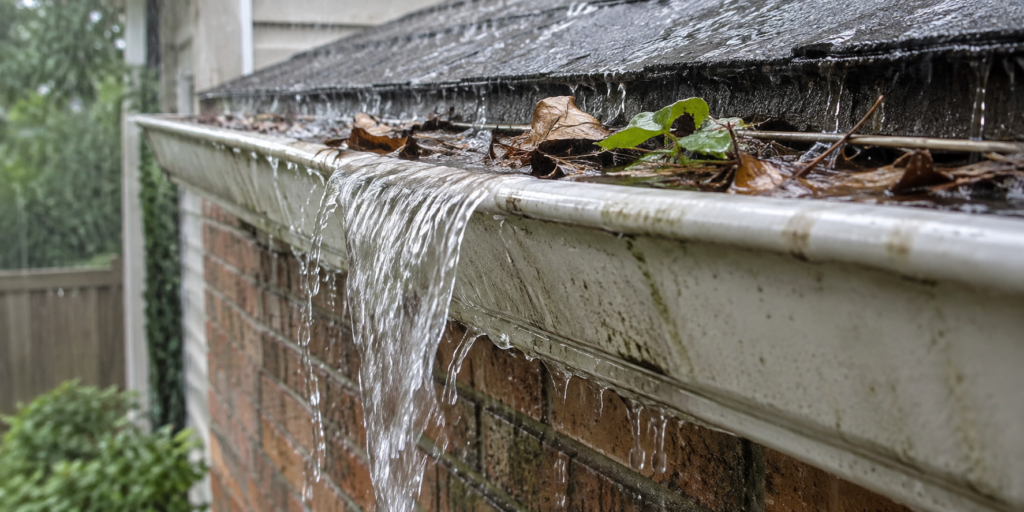
A roof sheds a surprising amount of water. During a single one-inch rainstorm, an average-sized roof can funnel hundreds of gallons off its edges. Gutters exist to catch that runoff and route it, through downspouts, to a point safely away from your home.
Without gutters, or with gutters that aren’t doing their job, that water drops straight off the roofline and lands in a narrow strip of soil right next to your foundation. It has nowhere to go, so it pools there, soaking the same few feet of ground with every storm. That’s exactly where you don’t want it.
That’s roughly how much water a 1,000 sq. ft. roof sheds during a single one-inch rainstorm. Without working gutters, most of it ends up in the soil beside your foundation.
Why This Matters More in Areas With Expansive Clay Soil
Not all soil reacts to water the same way. Sandy or well-draining soil tends to let moisture pass through quickly. Expansive clay soil is different: it absorbs water and swells, then dries out and shrinks, sometimes dramatically, depending on the season.
In regions where expansive clay is common, this cycle of swelling and shrinking is one of the leading causes of foundation movement. The problem isn’t usually “too much water” or “too little water” in an absolute sense. It’s inconsistency. When one side or corner of a home gets repeatedly soaked by roof runoff while the rest of the yard dries out normally, the soil underneath the foundation expands unevenly. The foundation has no choice but to follow the ground beneath it, which can lead to:
- Cracks in drywall, brick veneer, or the foundation itself
- Doors and windows that stick or no longer latch properly
- Sloping or uneven floors
- Gaps between walls, ceilings, and trim
- Separation around exterior doors or garage frames
Combine expansive clay soil with heavy seasonal rainfall (long dry stretches followed by intense storms) and the swings in soil moisture become even more extreme. That combination is exactly why proper drainage matters so much for homes in these areas.
How Gutters Go Wrong
A gutter system doesn’t have to be completely absent to cause problems. Some of the most common issues include:
Any one of these can create a persistent wet zone that keeps the soil in that area consistently more saturated than the soil elsewhere around the home.
Warning Signs Worth a Closer Look
After a heavy rain, it’s worth walking the perimeter of your home and checking for:
The Post-Rain Walkaround Checklist
- Water overflowing from the gutters instead of draining through downspouts
- Standing water or soft, spongy soil near the foundation
- Mulch or soil washed away in channels near the roofline
- Soil sloping toward the house rather than away from it
- Musty odors or moisture in a crawl space or basement
- New or worsening cracks, sticking doors, or uneven flooring
None of these signs automatically mean a home needs foundation repair, but they’re a strong signal that drainage around the home deserves a closer look.
What a Good Drainage System Does
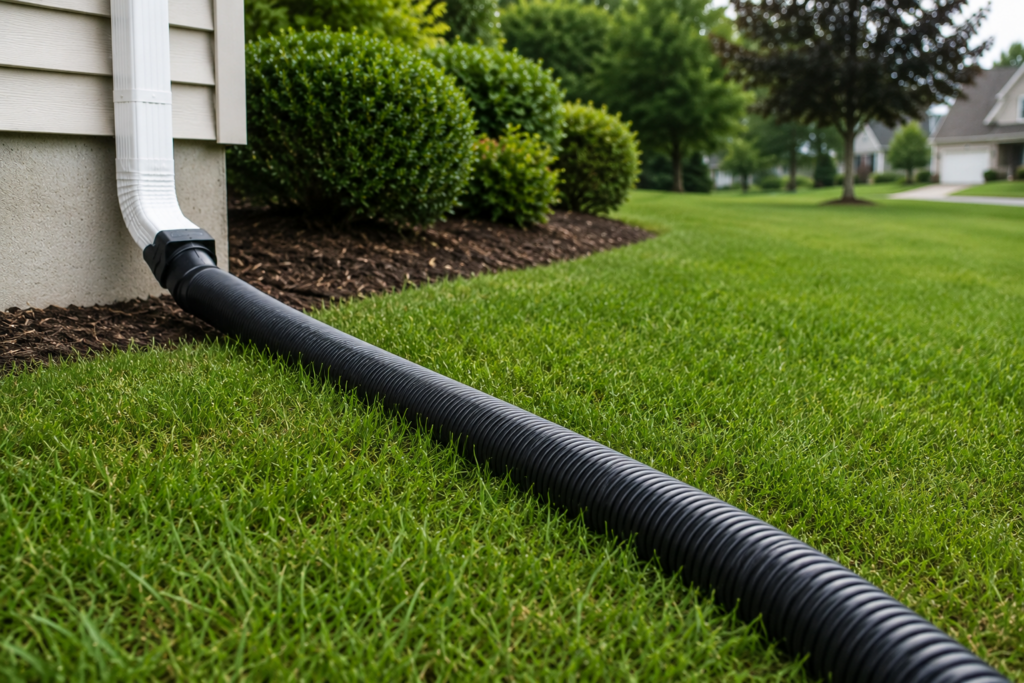
Gutters are only the first step. Where that water goes after it leaves the downspout matters just as much. A properly designed drainage system carries roof runoff well past the foundation and disperses it somewhere it can’t collect and put pressure on the soil around your home, whether that’s a low point in the yard, a storm drain, or a dedicated drainage line.
This is where tying your gutters directly into your home’s overall drainage system makes a real difference. Instead of downspouts simply dumping water a few feet from the wall, the water is captured and carried underground to a discharge point far from the foundation. This keeps moisture levels in the soil around the home more consistent, which is exactly what helps prevent the uneven expansion and shrinkage that leads to foundation movement.
This Is What Exterior Water Management Is All About
At Olshan, we call this Exterior Water Management: custom-designed surface and subsurface drainage built to actively move water away from your foundation before it can pool and cause damage. These systems often tie directly into your existing gutters, downspouts, and downspout extensions, so the water your roof sheds gets captured and carried to a safe discharge point instead of soaking the soil beside your home.
At Olshan, this is part of how we approach foundation protection. It’s not just about repairing damage after it happens, but looking at how water moves around the entire property. When we evaluate a home, we look at gutters, downspout placement, grading, and drainage together, because they all work as one system. In many cases, we can tie your existing gutters directly into a broader drainage solution designed to move water away from your foundation for good.
Simple Steps You Can Take Now
You don’t need a full drainage overhaul to start protecting your foundation. A few maintenance habits go a long way:
- Clean your gutters regularly, especially before your area’s rainy season, so they can actually carry the water they’re designed to handle.
- Extend your downspouts so they discharge several feet away from the foundation, not right at the base of the wall.
- Check your grading. The soil around your home should slope gently away from the foundation, not toward it.
When to Call a Professional
If you’re already seeing cracks, sticking doors, uneven floors, or persistent moisture near your foundation, gutter maintenance alone may not solve the underlying problem. At that point, it’s worth having a foundation specialist take a look, not just at the visible damage, but at what’s happening with water and soil around the entire home.
Olshan has been helping homeowners protect their foundations for decades, and drainage is always part of that conversation. If you’re not sure whether your gutters and drainage are doing enough to protect your home, we’re happy to take a look and walk you through what we find.
Keep Learning
Or call us at 1-877-465-7426