
Concrete Leveling for Salina, KS Homes
Uneven or cracked concrete around a property can feel frustrating and worrisome. Slabs that sink or separate may affect curb appeal, create trip hazards, and place stress on nearby structures. We use purpose-built Concrete Leveling solutions in Salina to help address these concerns with minimal disruption. By focusing on our PolyLift System and CrackLock crack stabilization approach, we help support safer walkways, driveways, patios, and floors while also supporting long-term property performance.
Our Certified Structural Technician begins with a detailed evaluation, then recommends options that may include concrete lifting, crack stabilization, or related foundation services. Throughout the process, we emphasize clarity, safety, and respect for your property so the path from concern to solution remains as straightforward as possible.
Overview of Concrete Leveling Services in Salina, KS
When slabs in and around a structure sink, tilt, or crack, surfaces can quickly become uneven and difficult to use. Our Certified Structural Technician evaluates whether the concern involves sunken patios, driveways, sidewalks, garage floors, pool decks, or interior flatwork, then recommends targeted concrete leveling or crack stabilization tailored to those conditions. We use our PolyLift System to help gently lift and help level concrete by installing a high-density polyurethane mixture beneath the slab through small injection points, as described in our PolyLift concrete leveling overview.
This process helps fill voids, support the slab, and improve elevation with minimal disturbance to finishes or landscaping. For slabs and walls that already show visible fractures, we may incorporate our Concrete CrackLock system to help manage movement along the crack line and support the surrounding concrete. By pairing lifting with localized crack stabilization when appropriate, we help address both surface appearance and underlying support in residential and commercial settings around Salina.
Because no two properties respond to soil and moisture in the same way, we take time to understand how each slab behaves before recommending a plan. Our goal is to help reduce safety risks and preserve the value of sidewalks, entries, parking areas, and other frequently used concrete surfaces.
Why Address Sinking Concrete and Trip Hazards Early
Sinking Concrete seldom remains stable over time. As sections of a slab continue to shift, small offsets between panels may increase and create raised edges. These transitions can grow from minor inconveniences into pronounced Trip Hazards that affect everyday movement around homes and businesses. Our Certified Structural Technician evaluates how these irregular surfaces appear in high-traffic areas and recommends concrete leveling or concrete lifting strategies that help reduce the risk of stumbles and damage to vehicles or equipment.
Uneven concrete also affects curb appeal. Driveways with settled panels, front walks with dips, or patios that slope away from doors can draw attention for the wrong reasons. By helping raise and help level concrete where feasible, we support both appearance and usability so outdoor spaces remain welcoming for visitors, employees, and family members.
From a broader structural standpoint, significant settlement near foundations, steps, or entries may indicate soil changes that deserve careful evaluation. While surface work focuses on slabs and flatwork, we can also coordinate with foundation repair solutions when our assessment suggests that deeper support may be appropriate.
How the PolyLift System Supports Precise Concrete Leveling
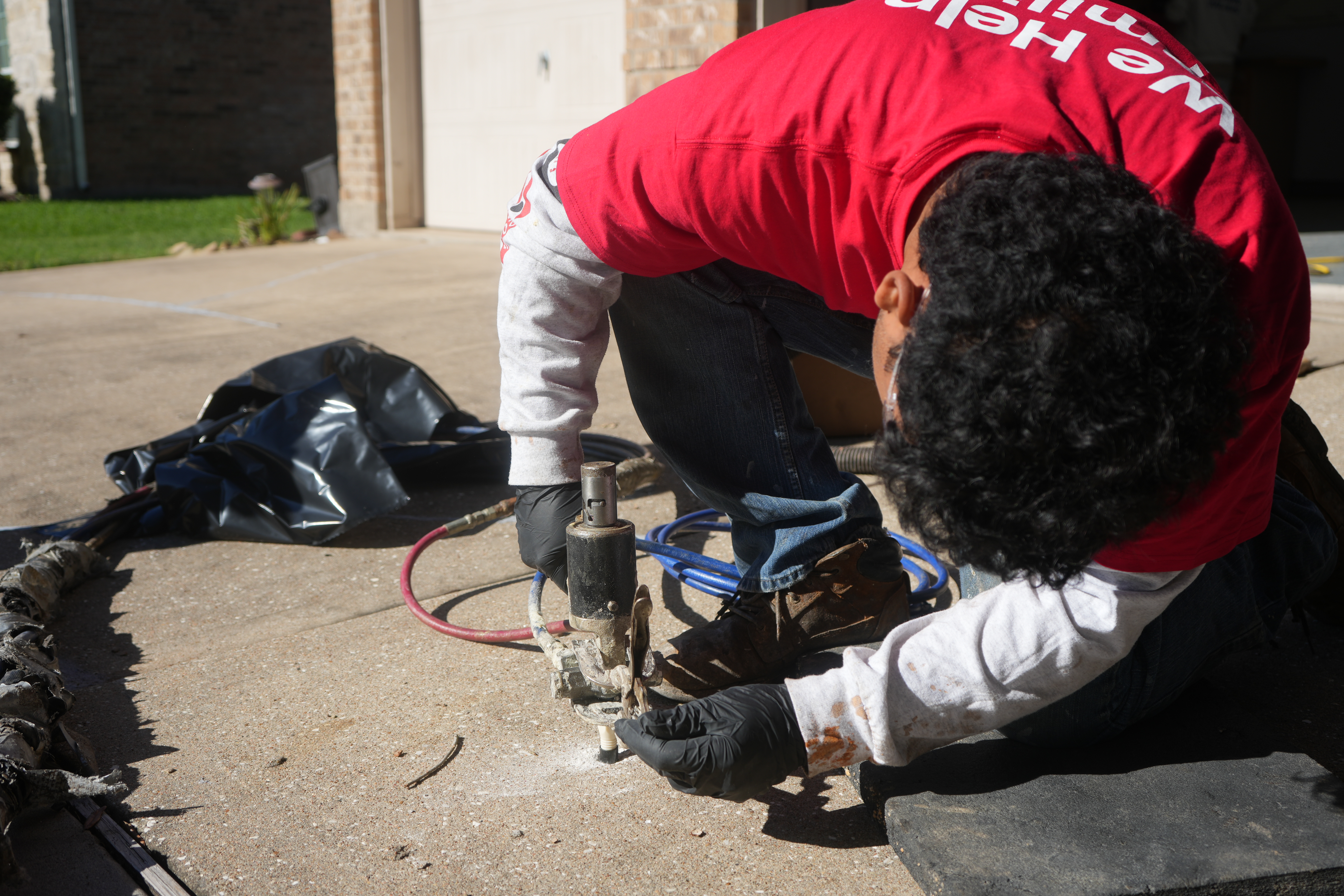
Our PolyLift System follows a defined sequence designed to support consistent, efficient Concrete Leveling. First, a Certified Structural Technician evaluates the sunken slab, notes areas of separation or voids, and determines strategic locations for small injection points. We drill tiny ⅝" holes, roughly the size of a dime, through the slab into the subgrade so we can access the space beneath without large demolition or excavation.
Through these openings, our technician injects a high-density polyurethane mixture that travels into gaps between the soil and concrete. As the material expands, it helps stabilize the supporting soil and gently lifts the slab. We monitor elevation changes in real time and work toward a near as-built position, making incremental adjustments to support controlled movement instead of abrupt shifts.
Because the process uses small holes and does not require large trenches, disruption to landscaping, steps, or adjoining slabs is limited. Once lifting is complete, our team cleans the work area, patches the tiny injection points, and smooths the surface. This streamlined approach allows many projects to be completed within a short time frame while still focusing on careful elevation control.
Concrete CrackLock System and Crack Stabilization Options
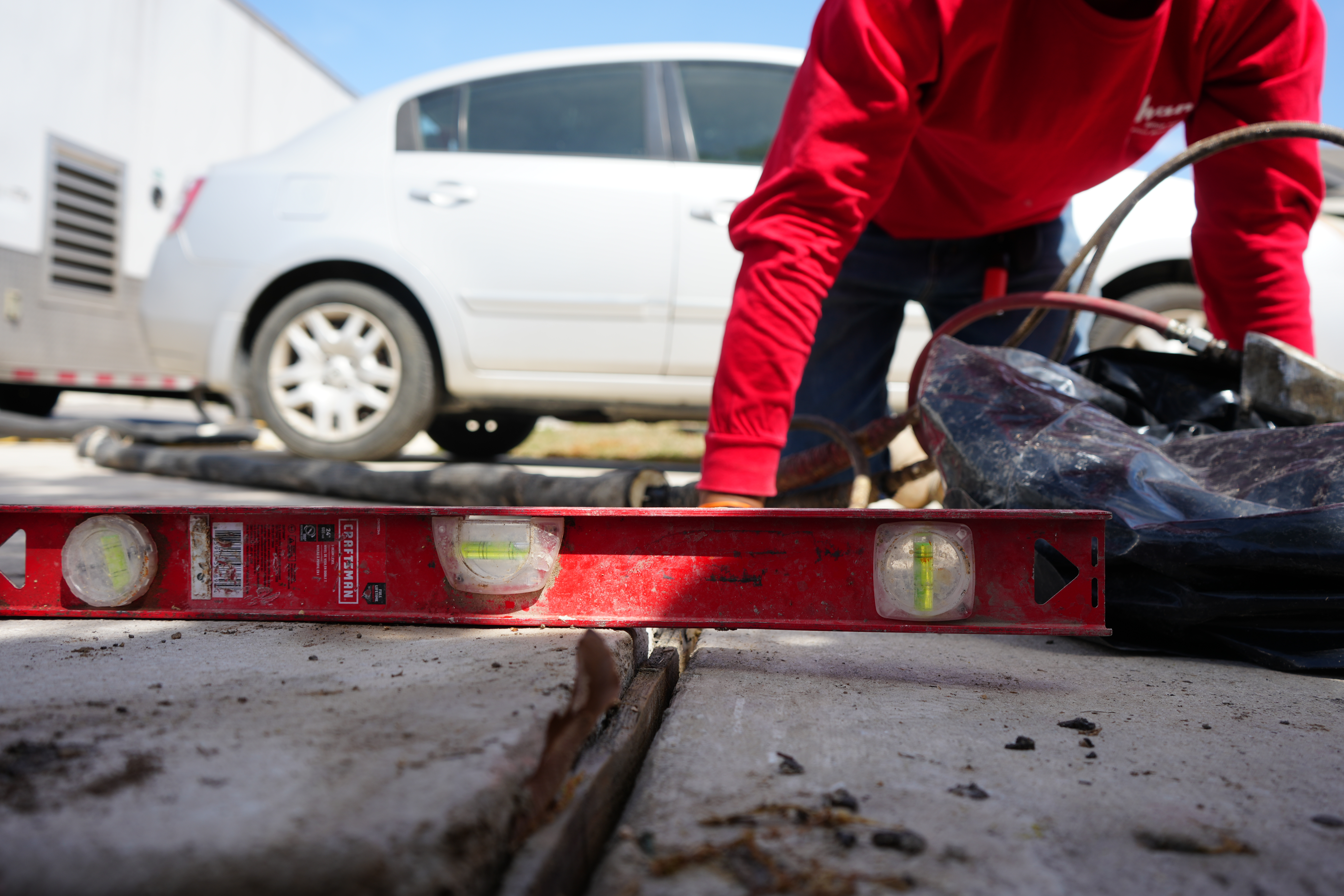
Some slabs and walls in Salina show not only settlement but also visible cracking. Our Concrete CrackLock System is designed to help manage these existing fractures so they are less likely to widen or spread under normal service conditions. We use CrackLock in a variety of settings, including concrete slabs, poured walls, masonry, concrete block foundations, and other structural or flatwork elements where added support across the crack helps improve performance.
By integrating CrackLock components into the cracked section, our Certified Structural Technician focuses on helping stabilize the surrounding area instead of only masking the appearance of the crack. This approach can be especially helpful when cracks are associated with structural stresses or repeated loading, even after concrete leveling or lifting has helped address settlement.
In many cases, combining PolyLift with CrackLock allows us to help raise settled slabs and support critical crack locations in a coordinated way. We review each situation carefully so the chosen methods reflect how the concrete is used and what property owners hope to accomplish from both a safety and appearance standpoint.
PolyLift Advantages Compared to Traditional Mudjacking
Our team uses PolyLift to help address uneven slabs with a modern approach that differs from traditional mudjacking. PolyLift relies on injecting a high-density polyurethane mixture through small ⅝" holes, which helps fill voids beneath the slab and allows lifting to be completed in minutes with limited disruption. In contrast, mudjacking typically uses heavier slurry materials and larger access holes, which can require more cleanup and may place additional weight on already stressed soils.
From a Cost-Effective Concrete Leveling standpoint, PolyLift supports efficient use of materials and labor while helping maintain a tidy work environment. The process generally requires smaller crews, less intrusive equipment, and no large excavation, which can be important for finished yards, landscaped areas, or busy commercial entries.
PolyLift also supports Eco-Friendly Concrete Solutions. The polyurethane material used in this system contains a percentage of renewable and recycled content and is described as environmentally safe when installed according to our patio leveling service guidelines. By combining sustainability features with practical lifting performance, we help property stakeholders balance environmental considerations with functional needs.
Residential Concrete Leveling and Patio Applications
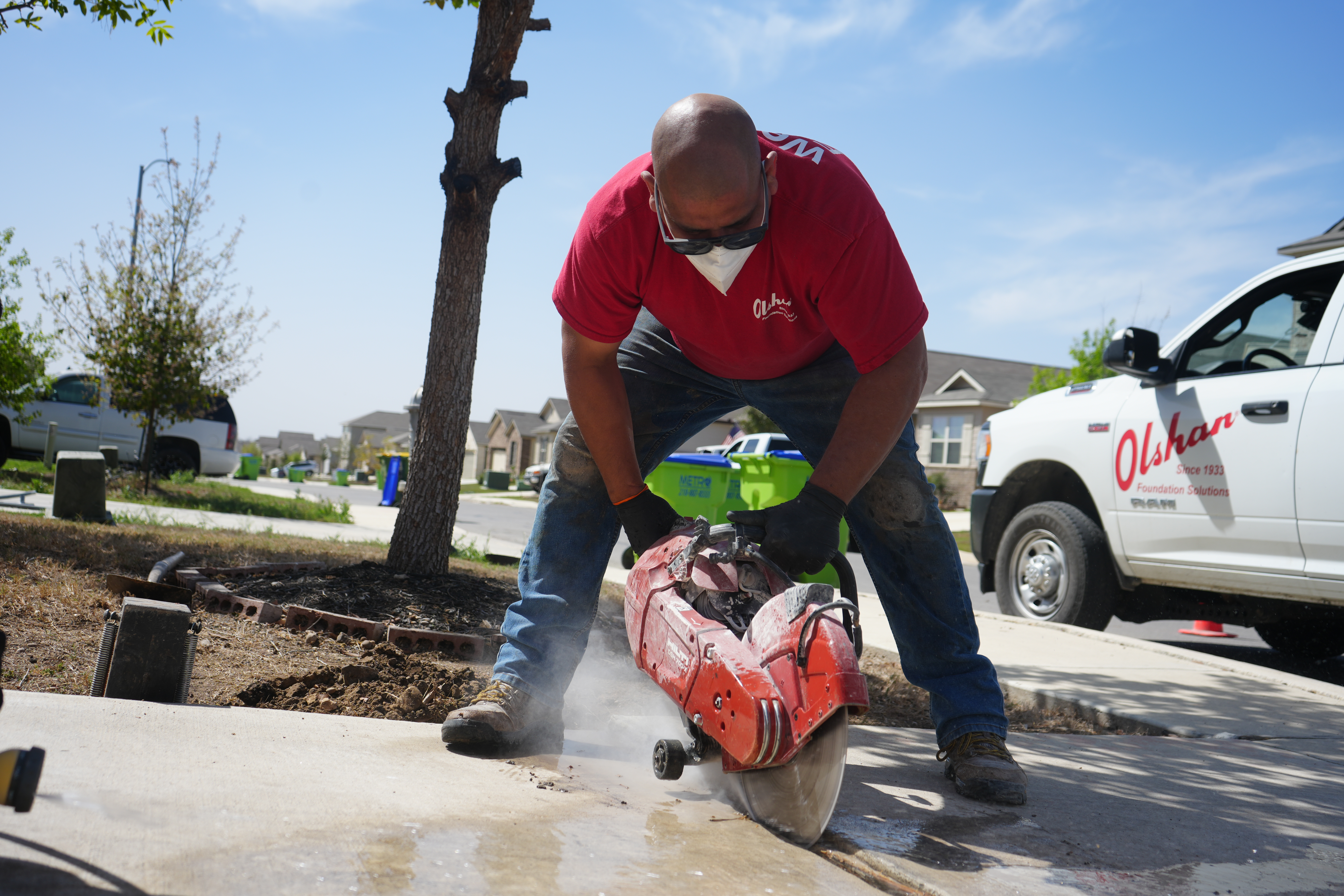
For residential projects in Salina, we commonly use PolyLift to help address sunken patios, garage floors, basement slabs, and driveways. These surfaces often serve as key gathering and access points, so keeping them as smooth and level as possible supports both convenience and safety. When a patio tilts toward a home or a driveway panel settles at the garage entry, homeowners may notice water pooling, furniture instability, or uncomfortable transitions between spaces.
Our Certified Structural Technician starts by identifying the pattern of settlement and determining where voids may have formed beneath the concrete. We drill small ⅝" holes at selected locations, then inject polyurethane beneath the slab to help stabilize the support layer and encourage a controlled lift. This approach is particularly helpful for patio leveling, where homeowners often want to keep existing finishes, landscaping, and adjacent structures in place.
Many residential projects can be completed in about a day, depending on the number of slabs and access considerations. Homeowners can prepare by moving furniture, vehicles, and stored items away from work areas so our team has a clear path to the slab edges and injection points. Once work is complete, surfaces are generally ready for normal use in a relatively short period, helping families return to regular routines with minimal downtime.
Commercial Concrete Leveling and Minimal Downtime Considerations
Commercial property stakeholders in Salina often need solutions that limit disruption to operations. Our Certified Structural Technician plans Residential and Commercial Applications with scheduling and access in mind so businesses can continue serving customers while concrete work progresses. PolyLift is an industrial-strength concrete leveling method used on offices, apartment complexes, townhomes, storefronts, golf paths, pools, municipal walkways, concrete pads, and other flatwork that sees frequent public use.
Because PolyLift uses small ⅝" injection points and a compact delivery system, our team can often complete lifting in tight windows, such as early mornings, evenings, or scheduled maintenance periods. The process avoids large excavation, heavy debris piles, or extended cure times that might otherwise close entrances or parking areas for days.
After lifting, we clean the affected areas and patch the small injection locations. This approach helps restore walking and driving surfaces to a more even condition while reducing the time that customers, tenants, or staff must navigate around work zones. For property managers focused on long-term asset performance, coordinating periodic Concrete Leveling can be an important part of broader site maintenance planning.
Cost, Timeline, and What to Expect From PolyLift Service
When we evaluate slabs in Salina for Concrete Leveling with PolyLift, our first priority is to understand how the concrete is performing and what outcomes property owners hope to achieve. Because the polyurethane mixture is injected through tiny ⅝" holes, installation is intentionally streamlined. Many small projects can be addressed in minutes, and even larger residential or commercial areas are often completed within about a day, depending on site conditions and access.
From a cost perspective, PolyLift is designed as a modern alternative to heavy excavation or traditional mudjacking. By using a targeted injection method, we help manage labor, cleanup, and material demands, which supports cost-effective project planning without sacrificing attention to detail. Surrounding landscaping generally remains undisturbed, construction debris is minimized, and the patched injection points blend into the existing slab pattern over time.
Our estimates are free, and we take time to explain the recommended approach, anticipated schedule, and any related work that may support performance, such as addressing drainage patterns or reviewing nearby Foundation Repair needs when appropriate. This transparency helps property stakeholders make informed decisions about how and when to proceed with concrete leveling work.
Eco-Friendly Materials and Long-Term Performance Considerations
Many homeowners and property managers in Salina want solutions that support both structural performance and environmental goals. Our certified technicians use a polyurethane mixture that is described in our service materials as environmentally safe and installed through small injection points that help reduce disturbance to surrounding areas. The product contains a noted percentage of renewable and recycled content, which supports positioning PolyLift among broader Eco-Friendly Concrete Solutions rather than a purely cosmetic approach.
The material is characterized as long-lasting in our documentation, and it plays a key role in supporting durable Concrete Leveling performance. Because specific year-based lifespan metrics are not provided, we describe longevity in qualitative terms and focus on how the system helps support slabs over time when paired with appropriate site maintenance.
Long-term performance also depends on factors such as soil conditions, moisture control, and surface loading. We discuss these influences during our evaluation so property owners understand how routine maintenance and monitoring may help support the results of PolyLift and CrackLock work on their properties.
Practical Next Steps for Salina Property Owners
When property owners in Salina notice settlement, cracking, or frequent puddling on concrete surfaces, scheduling time with a Certified Structural Technician is a productive starting point. During this visit, we review sinking slabs, uneven walkways, patios, or floors that may benefit from Concrete Leveling using the PolyLift System, as well as any related structural concerns that could require Foundation Repair or other services.
Before our assessment, it can be helpful to walk through the property and document each concern. Photographs of cracks, settled sections, and locations where one slab sits lower than another provide useful reference points. Simple measurements, such as noting approximate step heights or the width of visible gaps, help our team understand how surfaces have changed over time and which repair combinations may offer the most benefit.
Addressing sinking concrete and cracks in a timely way supports safety, curb appeal, and overall property performance. Our PolyLift and CrackLock solutions are designed to help raise and help support slabs with minimal disruption, whether the work involves a small residential patio or a busy commercial walkway. To discuss conditions at your property and explore options with our team, Contact us.