
Olshan Foundation Repair Serving Nacogdoches, TX
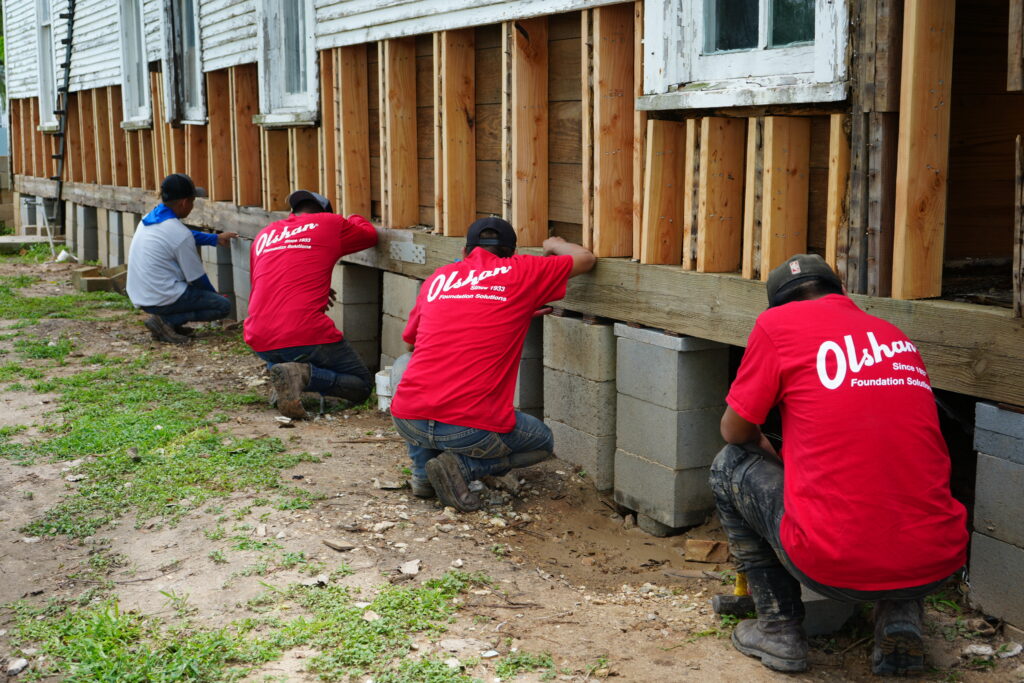
They call it the Oldest Town in Texas, and the ground beneath Nacogdoches has been holding up structures since before there was a Texas to speak of. Nine flags. A Spanish colonial founding in 1779. Victorian homes along Mound Street designed by German-born architect Diedrich Rulfs in the 1880s. Railroad-era cottages in the Zion Hill Historic District. Mid-century bungalows spreading out from the Stephen F. Austin State University campus. This city carries more layers of history per square mile than almost anywhere in the state – and every one of those layers sits on East Texas soil that has been working against foundations since the first permanent structures went in.
Olshan has been repairing foundations across East Texas and the broader region since 1933. We’ve worked in Nacogdoches County for decades, and we understand what the combination of Piney Woods humidity, significant annual rainfall, hilly terrain, and Nacogdoches County’s clay-heavy soils does to homes over time. Whether you’re the steward of a century-old Victorian near Oak Grove Cemetery or the owner of a newer home in one of the subdivisions that ring the city along Highway 59, the soil beneath your foundation is the same story.
The Ground Beneath Nacogdoches – What’s Actually Happening
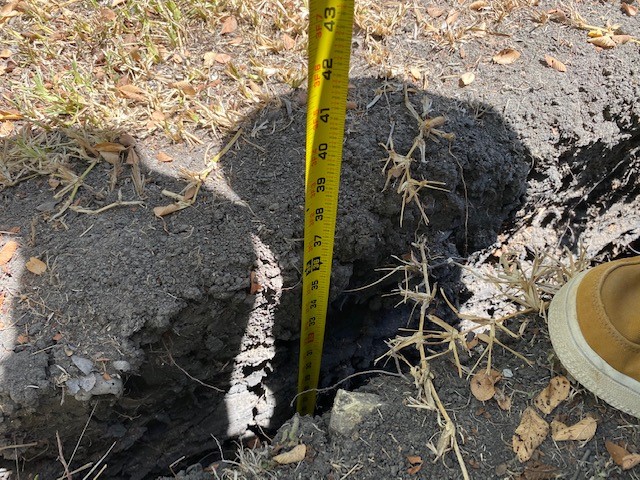
Nacogdoches sits on terrain that ranges from 150 to 600 feet above sea level – a hilly landscape unusual for East Texas, shaped by the convergence of the Lanana and Banita Creeks that run through the heart of the city. That topography matters for foundations because it creates highly variable drainage patterns. A home on a ridge behaves differently from one at the base of a slope. A lot positioned near one of the creek corridors drains and holds moisture differently than one on higher ground a few blocks away. Nacogdoches doesn’t have one foundation story – it has dozens, depending on exactly where a home sits within the city’s rolling landscape.
What most of those locations share, however, is clay soil. The soils throughout Nacogdoches County contain significant clay concentrations that expand when wet and contract when the Piney Woods summer asserts itself and pulls moisture from the ground. The region receives roughly 50 inches of rain annually, but the distribution is uneven – wet springs, drier summers, and the kind of intense storm events that can saturate clay soil rapidly and then leave it to bake for weeks at a time. That wet-dry cycling is the engine that drives foundation movement in East Texas, and in Nacogdoches it has been running continuously for as long as there have been homes here.
There’s one more variable that Marshall and Nacogdoches share but that most Texas cities don’t have in the same concentration: a dense forest canopy of loblolly pine, water oak, sweet gum, and magnolia growing in and around established residential neighborhoods. Mature trees in close proximity to foundations extract moisture from the soil during dry periods through root systems that extend well beyond what most homeowners would guess. The localized soil contraction this creates directly beneath and adjacent to foundations is a significant contributor to the differential movement that produces the cracked walls, sticking doors, and uneven floors that bring homeowners to Olshan’s door.
Nacogdoches Homes Across the Generations
The housing stock in Nacogdoches tells the story of a city that has been continuously inhabited and built upon for more than two centuries – and that means foundation challenges that vary dramatically by neighborhood and era.
The oldest residential areas around downtown – the Victorian homes on Mound Street, the structures in the National Register-listed downtown district, the Sterne-era buildings and their neighbors – represent some of the most historically significant residential architecture in Texas. These are homes built in an era when concrete slabs didn’t exist and pier and beam construction was the universal standard. Many have been occupied continuously for well over a hundred years, accumulating decades of soil movement history beneath their footings. The Zion Hill Historic District on the north side, home to historic shotgun houses and one of East Texas’s most significant African American heritage neighborhoods, falls into this category as well – modest frame construction on pier and beam foundations that have been in Nacogdoches County’s humid, clay-influenced soil for generations.
Moving outward from the historic core, the neighborhoods that developed around the SFA campus and along the major corridors through the 1950s, 60s, and 70s represent Nacogdoches’s largest inventory of concrete slab homes. These structures are now at the age where the cumulative effects of soil movement tend to become visible – mid-century slabs that have been through 50 to 70 wet-dry cycles, often on lots where the drainage infrastructure has shifted and mature trees have grown in ways that were never part of the original site plan. Newer development along the Highway 59 corridor heading toward Lufkin and out along the farm roads surrounding the city adds recent construction to the mix, where foundations are newer but the soil isn’t.
Foundation Repair – Olshan’s Cable Lock ST Plus System
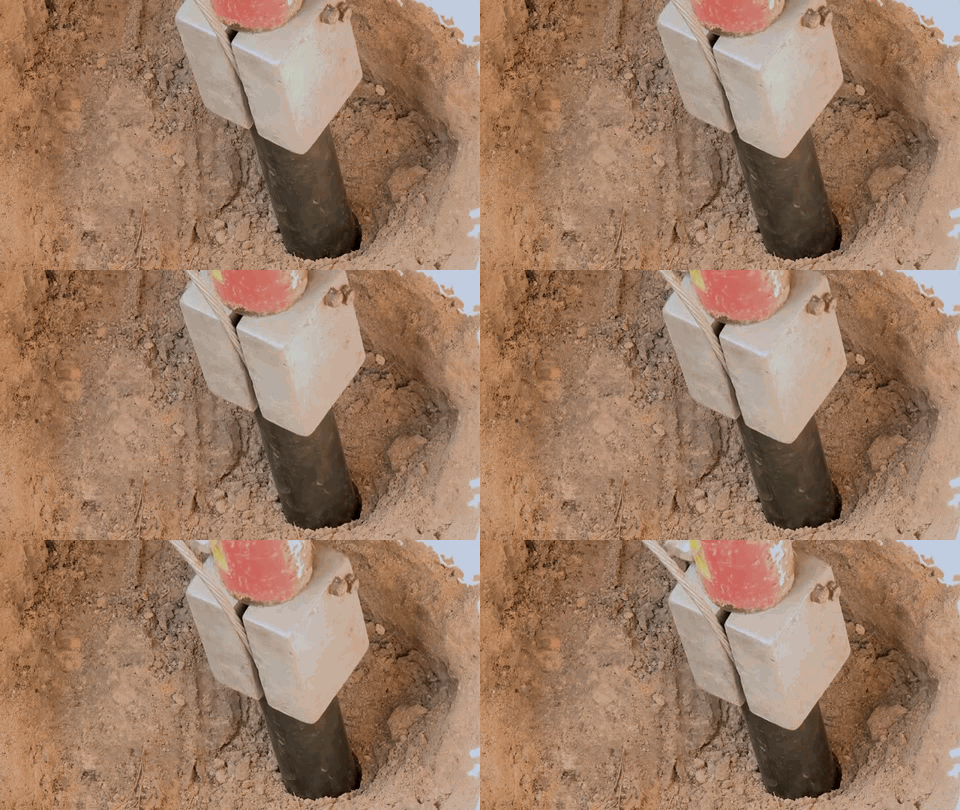 The Cable Lock ST Plus pier system is Olshan’s patented foundation repair solution, and it’s built for exactly the conditions that define Nacogdoches County – expansive clay soil with significant seasonal moisture variation, complicated by the root system activity of a mature Piney Woods forest canopy. The system drives hybrid concrete and steel piers below the active zone where soil moisture changes drive movement, anchoring your foundation in stable ground that doesn’t respond to what happens at the surface. Movement stops. The cracks that opened over years of differential settlement can be addressed. And every repair carries Olshan’s industry-leading transferable warranty.
The hilly terrain of Nacogdoches means that no two foundation situations are exactly alike here. A home on a south-facing slope with poor drainage has experienced completely different moisture history than a home on a ridge with good natural runoff a few streets over – even if they were built in the same year from the same plans. Our Certified Structural Technicians account for that. They evaluate the specific drainage conditions of your lot, the proximity and species of nearby trees, the age and construction type of your home, and the visible pattern of movement before recommending a solution. We also offer helical piers for historic homes and pier and beam applications where access or load conditions make conventional driven piers the wrong choice.
Signs in Nacogdoches homes that point to active foundation movement:
- Diagonal plaster or drywall cracks in historic downtown homes that have been spreading gradually over years
- Door frames in SFA-area mid-century slab homes racked out of square, often worse on the side nearest large trees
- Floor deflection in pier and beam homes in Zion Hill and other older neighborhoods – sections that give underfoot where they didn’t before
- Exterior brick separation and widening mortar joints on homes in Nacogdoches’s established residential corridors
- Visible gaps between the soil and the perimeter of slab foundations in late summer after extended dry periods
- Sticking exterior doors that loosen in wet weather and bind in dry – the classic seasonal foundation symptom in East Texas clay
Crawl Space Recovery
Nacogdoches has more pier and beam homes per capita than most Texas cities its size – a direct consequence of its age. The historic core, the Zion Hill district, the railroad-era neighborhoods, and many of the mid-century homes closer to the university campus all sit on raised pier and beam construction rather than concrete slabs. In the Piney Woods climate, where humidity is high year-round and annual rainfall averages around 50 inches, an unprotected crawl space beneath one of these homes is one of the most demanding structural environments in the state.
What Olshan typically finds when accessing crawl spaces in Nacogdoches’s older pier and beam homes is a layered problem. Ground moisture has never been controlled, so the soil beneath the floor is perpetually damp. Wood piers have been sitting in that moisture for decades and have softened or rotted at their base. Joists show fungal staining and early decay. In some cases, the original brick piers have shifted or collapsed, leaving spans of floor unsupported. Pest activity – particularly subterranean termites, which are endemic to East Texas’s moist forest soil – has often compounded the structural deterioration.
Olshan’s crawl space recovery program approaches all of it systematically: we assess the complete structural condition below grade, replace or sister deteriorating posts and piers, apply Lumberkote wood preservative to existing timber to stop active decay, install a complete vapor barrier encapsulation system, and address any air quality issues that have been migrating upward. A properly recovered and encapsulated crawl space under a Nacogdoches historic home isn’t just structurally sound – it’s a fundamentally different environment that stops producing the conditions that caused the problem in the first place.
Exterior Water Management
Nacogdoches receives about 50 inches of rain annually and sits on hilly terrain bisected by two creek systems. That’s a combination that should produce well-draining lots – and on well-designed properties with proper grading it does. The problem is that most of Nacogdoches’s established neighborhoods predate modern drainage engineering by decades or generations, and the city’s hilly topography means that in many situations, a home sits in a natural collection zone for runoff from the properties uphill of it. Water finds the path of least resistance, and in neighborhoods built before drainage management was a standard part of site development, that path has often led directly to foundation perimeters.
Add in mature tree root systems that have spent decades redirecting subsurface water flow, lots where grading has reversed over time as soil settles unevenly, and gutters that were sized for a different era’s rain events, and you get the drainage picture that Olshan routinely finds in Nacogdoches. The solution isn’t universal – it’s specific to each property’s topography, drainage history, and the location of structures on the lot. We design and install solutions that match the problem: French drains that capture and route uphill runoff before it reaches the foundation, surface channel systems that manage roof runoff more effectively than existing downspouts, and regrading that reestablishes a positive drainage slope away from the structure.
For homes near the Lanana and Banita Creek corridors, groundwater considerations add another dimension. High water tables in low-lying areas adjacent to these waterways require drainage solutions that address both surface runoff and subsurface moisture – a more complex problem than simple lot grading, and one where Olshan’s experience in East Texas’s creek-corridor terrain is particularly relevant.
Concrete Leveling – PolyLift
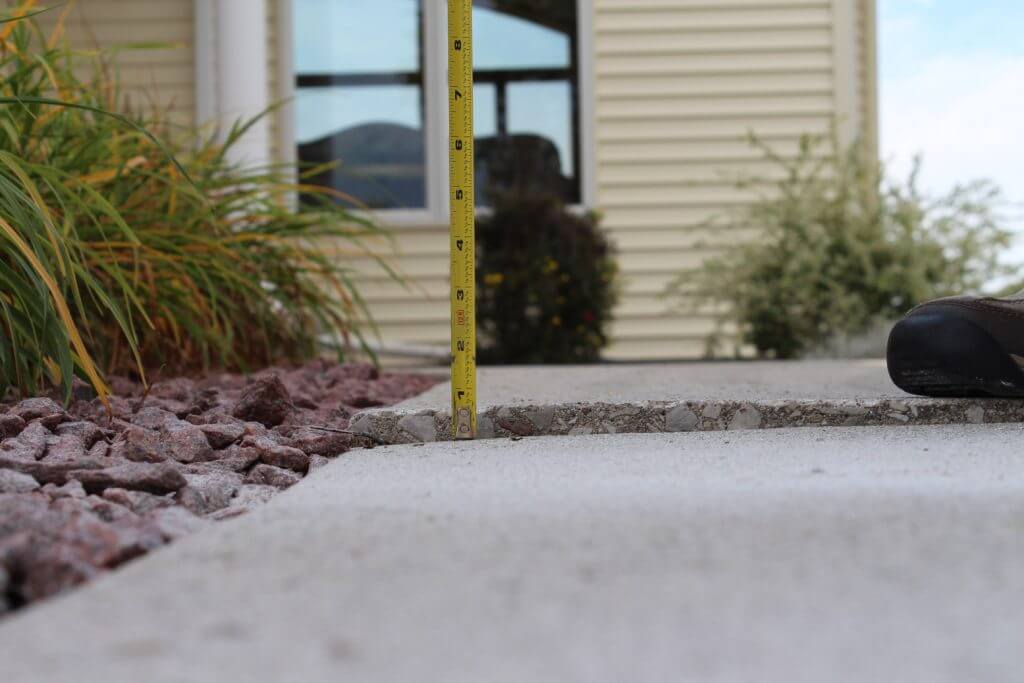
Settled and sunken concrete is visible throughout Nacogdoches’s older neighborhoods in ways that tell the soil’s story clearly. Sidewalks on tree-lined streets where roots have pushed panels up on one side and left voids beneath adjacent sections on the other. Driveways in the historic district that slope toward the house rather than away from it, channeling decades of rainfall straight at foundation perimeters. Porch slabs on Victorian-era homes that have settled away from the front door threshold, creating a lip that grows a little larger every few years.
In a city where historic preservation is taken seriously and landscape character matters to residents, full concrete replacement is rarely the right call – it’s expensive, it disturbs the surrounding landscape, and in a clay soil environment, new concrete will develop the same problems unless the underlying void and drainage issues are addressed first. Olshan’s PolyLift service fills those voids directly: small injection ports, expanding high-density foam, a lifted and re-leveled surface, and a result that’s complete in hours without heavy equipment on the property. For homes in Nacogdoches’s historic neighborhoods where every mature tree and established planting matters, that’s a meaningful difference.
A Few Things Worth Knowing if You Own a Historic Nacogdoches Home
Nacogdoches’s historic housing stock is part of what makes the city genuinely special – but it also means that foundation repair in this city sometimes requires thinking that goes beyond a standard pier installation. A few things worth knowing:
Age isn’t the same as damage. A pier and beam home that has been occupied continuously since the 1890s has been through more than 130 years of East Texas soil movement. Some of that movement has already been absorbed and accommodated by the structure. The question Olshan’s technicians are answering is whether active movement is still occurring – not whether movement has ever occurred. About 20% of the homes we inspect don’t need any repair at all, and we’ll tell you that honestly when it’s the case.
Tree proximity matters more in Nacogdoches than in most Texas cities. The mature loblolly pines and water oaks that line streets throughout the historic districts aren’t just aesthetic – they’re active participants in the moisture environment beneath every foundation on those blocks. Our evaluation always accounts for what’s growing near the structure and where its root zone likely extends.
Drainage solutions often do more long-term work than pier installation alone. In Nacogdoches’s hilly topography, a home that keeps receiving concentrated runoff against its foundation will keep experiencing soil movement even after piers are installed. The most durable repairs we do are the ones where the drainage problem driving the movement is addressed at the same time.
Serving Nacogdoches and Deep East Texas
Olshan serves Nacogdoches and the surrounding communities of Deep East Texas – including Lufkin, Center, Carthage, Shelbyville, and the communities along the Highway 59 and Highway 7 corridors through this part of the state. We’ve been repairing foundations in this region since 1933, and we’ve built our understanding of East Texas’s specific soil conditions, forest environment, and historic housing stock over generations of work here.
Free foundation inspection is where every conversation starts. Our Certified Structural Technicians will walk your property, assess your foundation, explain what they find clearly, and give you an honest recommendation without pressure. Contact Olshan today to schedule yours.