
Found a crack and not sure how worried to be? Upload a photo, answer a few quick questions and get a free crack analysis in minutes.
A simple first look at what your crack may be telling you, backed by Olshan since 1933.
Prefer to talk it through? Call 1-877-465-7426 and we will help you over the phone.
How the Free Crack Analysis Works
Snap a Photo
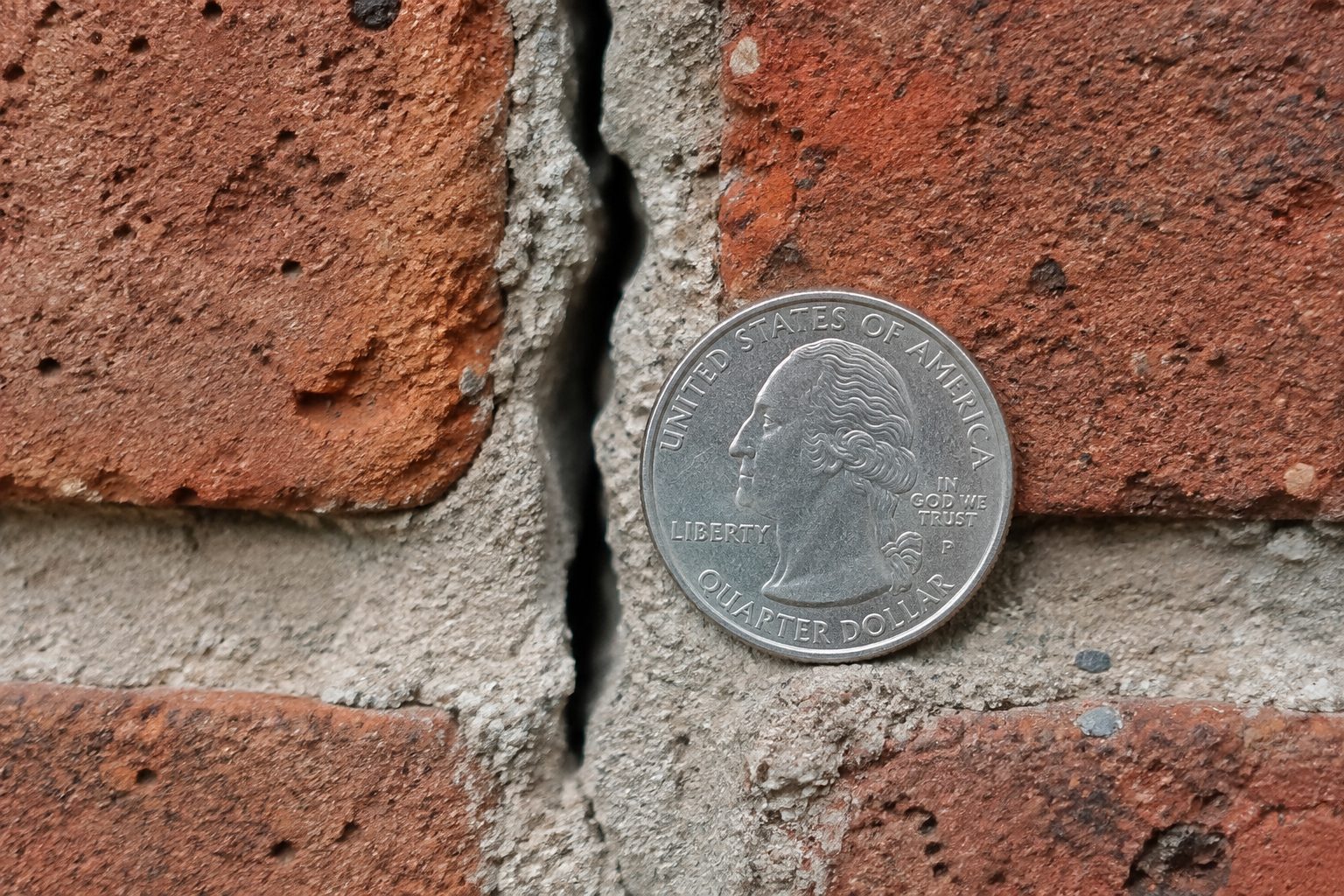
Take a clear photo of the crack. A wide shot plus a close-up works best. Place a coin or tape measure next to the crack for scale if you can.
Answer a Few Questions
Tell us where the crack is, how long it has been there and whether it has changed. This context helps produce a clearer, more accurate analysis.
Get Your Analysis
Review what your crack may indicate. If it deserves a closer look, you can schedule a free on-site evaluation with a Certified Structural Technician.
What Different Foundation Cracks Can Mean
Not every crack signals a foundation problem, but certain patterns deserve attention. Here is what the most common crack types often indicate.

Hairline Vertical Cracks
Thin vertical cracks are common as concrete cures and are often cosmetic. They are still worth monitoring. If a hairline crack widens over time or begins letting in moisture, it is time for a closer look.

Diagonal Cracks
Cracks running at an angle, especially from the corners of doors and windows, can point to differential settlement, where one part of the home settles faster than another. Width and direction matter here.

Stair-Step Cracks in Brick or Block
Cracks that climb along mortar joints in a stair-step pattern are the crack type most closely associated with foundation settlement. They are common enough that we cover them in depth below.

Horizontal Cracks
Horizontal cracks in basement or foundation walls can indicate soil pressure pushing against the wall. These are among the crack types worth taking most seriously and are a good reason to schedule an evaluation.
Stair-Step Cracks: The Crack Pattern That Tells a Story
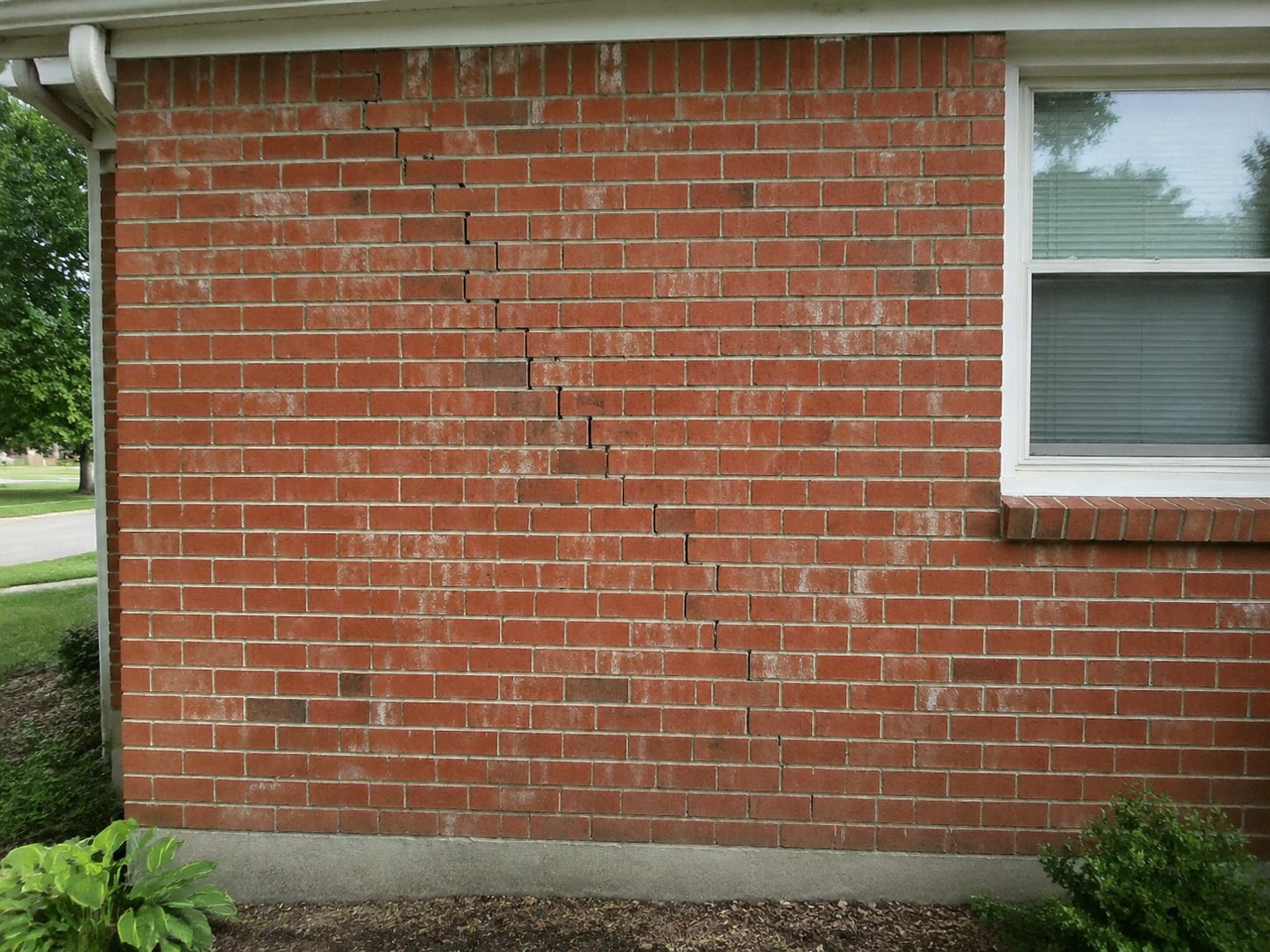
Of all the crack types homeowners photograph, stair-step cracks in brick or block are the ones that most often trace back to foundation movement. The pattern is distinctive: the crack follows the mortar joints between bricks, climbing diagonally across the wall one course at a time like a staircase.
Why Stair-Step Cracks Form
Brick walls are rigid. When the foundation beneath them stays level, the wall holds its shape. When one section of the foundation settles lower than another, the wall above has to absorb that movement, and it gives way at its weakest points: the mortar joints. The crack steps along those joints, following the path of least resistance, which is why a stair-step crack usually points diagonally toward the area of the foundation that has dropped.
Across Texas and much of the South, the usual driver is expansive clay soil. Clay swells when it absorbs water and shrinks as it dries, and a foundation sitting on soil that swells on one side and shrinks on the other is being lifted and lowered unevenly, season after season. Drainage problems, plumbing leaks under the slab and large trees drawing moisture from one side of the home can all feed the same cycle. The stair-step crack in the brick is often the visible record of movement happening below.
How Stair-Step Cracks Progress
Foundation settlement is rarely a one-time event. Because the soil keeps cycling, the movement tends to continue, and the crack keeps score. Here is the progression professionals watch for.
Hairline in the Mortar
Widening and Climbing
Separation and Displacement
Inside the Home, the Same Movement Shows Up Differently
A settling foundation does not only crack brick. The same movement that produces a stair-step crack outside often shows up indoors as diagonal drywall cracks radiating from door frames and window corners, doors that swing or no longer latch, gaps between crown molding and the ceiling, and floors that slope toward the settling side. If your stair-step crack has an interior counterpart on the same wall, mention it in the analysis tool, because matching inside-and-outside evidence strengthens the case that the foundation, not the brick, is the source.
The good news: settlement that produces stair-step cracking is a well-understood problem with proven repair methods. Olshan has been stabilizing foundations since 1933, using systems like the Cable Lock ST Plus hybrid piling to reach load-bearing strata and help stabilize the settled section of the home. A free on-site evaluation with a Certified Structural Technician determines whether your crack calls for repair, monitoring or nothing at all.
Signs a Crack Deserves a Professional Look
Foundation Crack Questions, Answered
Are stair-step cracks in brick always a foundation problem?
Is the foundation crack analysis really free?
How accurate is a photo-based crack analysis?
What kind of photos work best?
Which foundation cracks are serious?
What happens after I submit my photo?
How much does foundation crack repair cost?
Related Foundation Repair Resources
Not Sure About That Crack? Find Out Today.
Upload a photo for your free analysis, or skip straight to a free on-site evaluation with a Certified Structural Technician. Either way, you will know where your foundation stands.